While searching for a chassis for my two-wheeled bot I came across an inexpensive track chassis from Tamiya.
The parts are:
- 1 x Tamiya 70168 Double Gearbox Kit ~ $10
- 1 x Tamiya 70157 Universal Plate Set (2pct) ~$9
- 1 x Tamiya 70100 Track and Wheel Set ~ $8
- 2 x Brushed DC Motor: 130-Size, 6V, 11.5kRPM, 800mA Stall ~ $4
I grew up making Tamiya models so it felt very retro putting it all together. I saw “(c) 1976 Tamiya” on one of the plastic frames.
Not sure how durable the chassis will be. The materials are not of bad quality but it’s fairly light plastic.
The first part I built was the twin motor gear box.
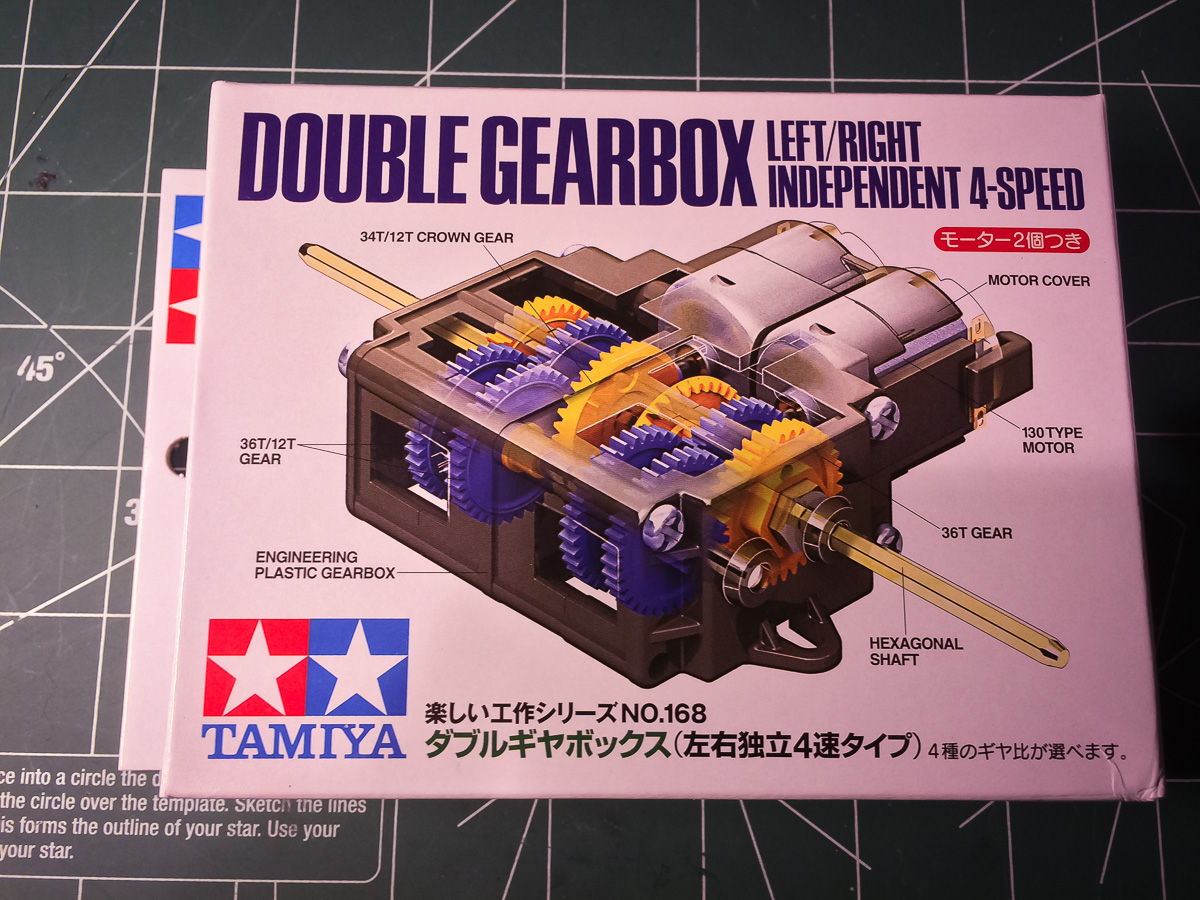
The Packaging
All the Pieces
There are four configurations to choose from: 12.7:1, 38.2:1, 114.7:1, 344.2:1. I chose 114.7:1.
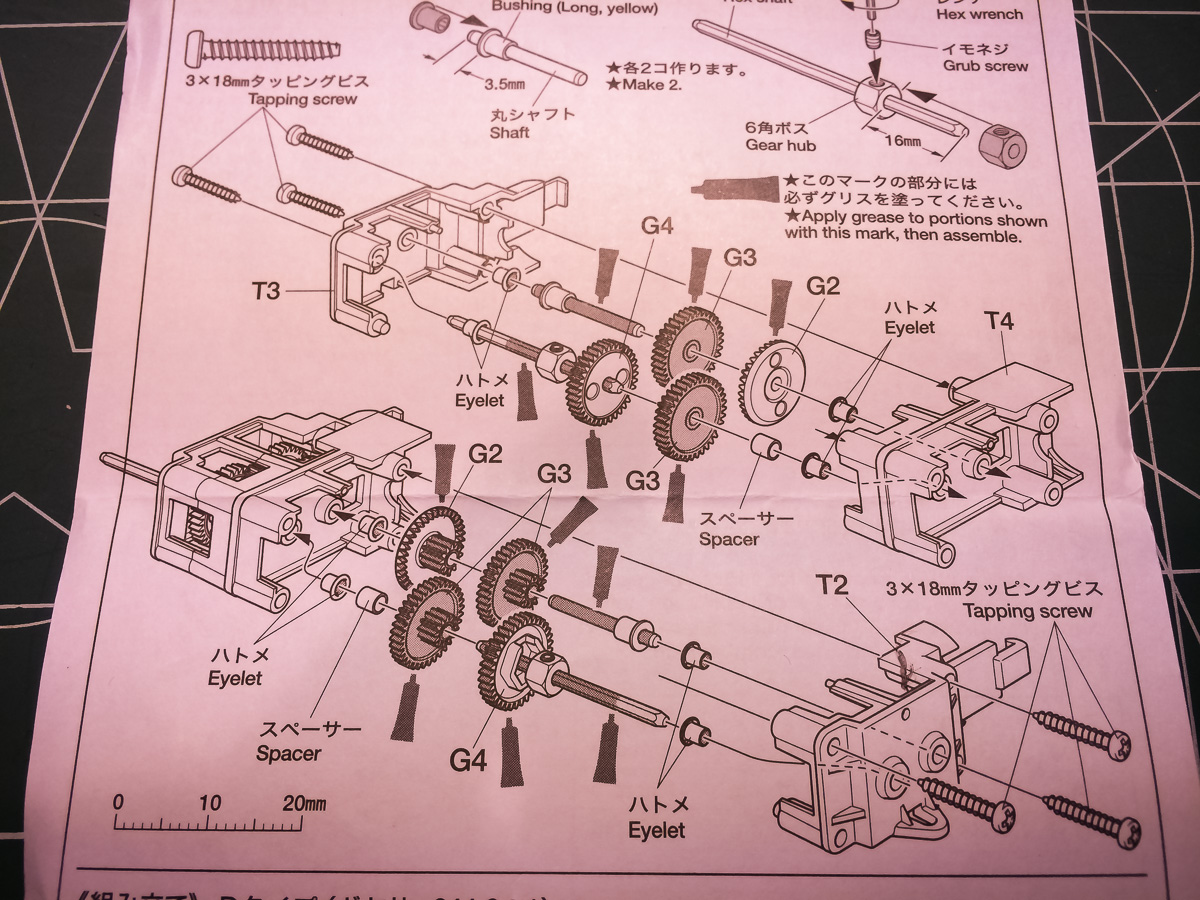
114.7:1 Configuration
As you can see from the instructions the assembly is quite involved but not too hard.
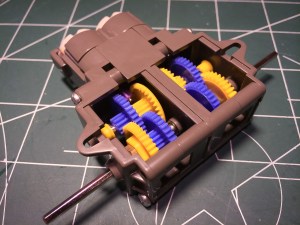
Fully Assembled
The axles are metal but the gears are plastic. They do provide lubricant so hopefully that helps reduce wear somewhat.
Pololu (the website where I purchased the kits) recommends replacing the low-voltage/high-current motors, that come with the kit, with higher voltage motors that draw much less current, which is what I did.
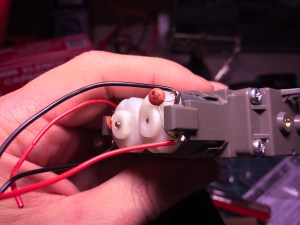
Adding the Motors
You’ll, obviously, need to solder wires to the motor terminal and it’s highly recommended to put a 0.1 uF non-polarized capacitor across the terminals.
When adding the capacitor you need to avoid blocking the area where the motor-housing for the gearbox “clips” on the the motor’s end cap – you can see it between he terminals in the image above and how I positioned the capacitor accordingly.
Next up was building the chassis and tracks.
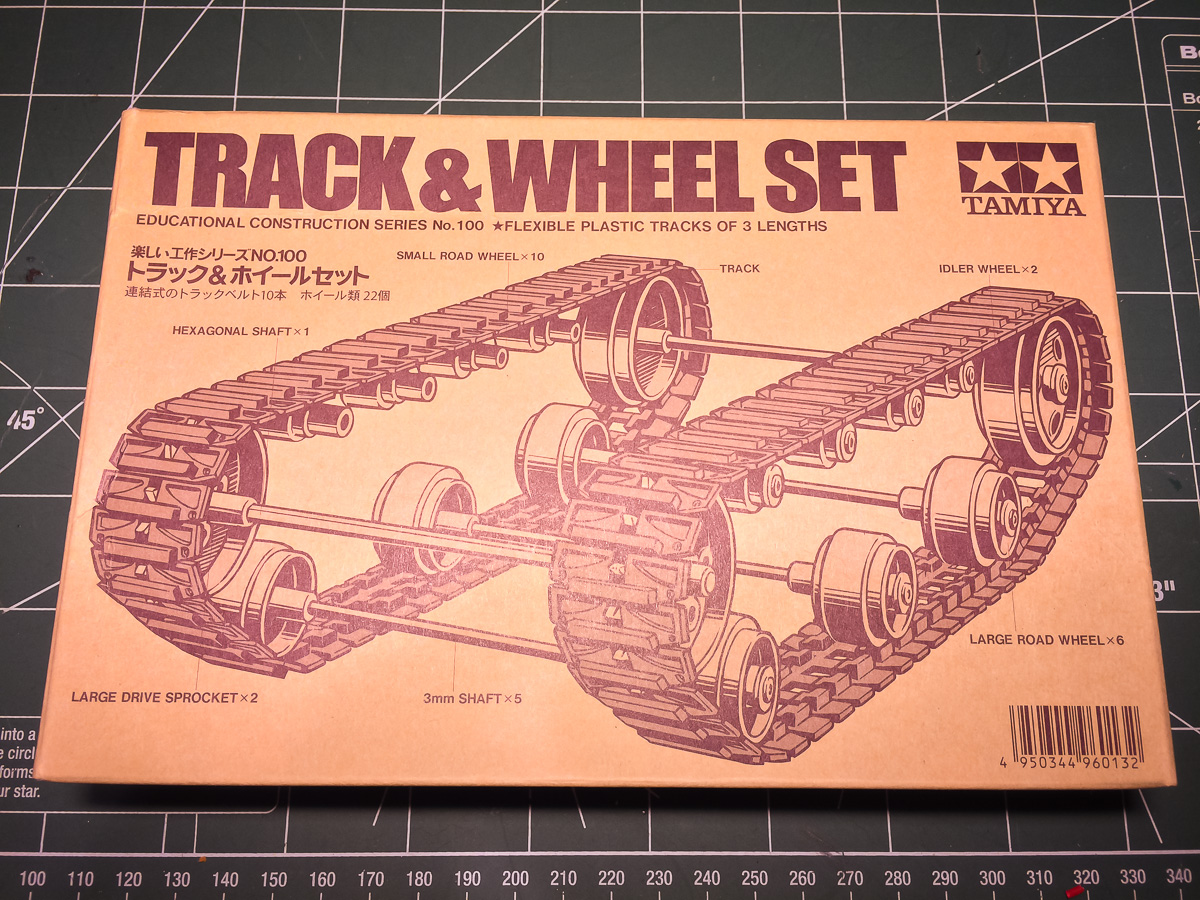
Track Set Packaging
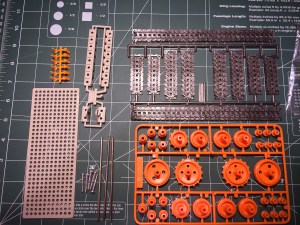
Track & Wheel Parts with 1 Universal Plate Set
For the track there are (for each side) a 1 x 30 link section, 2 x 10 link sections and 2 x 8 link sections. For my setup I used 1 x 30 + 2 x 10 + 1 x 8 sections to make each track. Joining the sections together is a little tricky. Helps to gently use a small flat head screwdriver to “pull through” the interconnecting tabs.
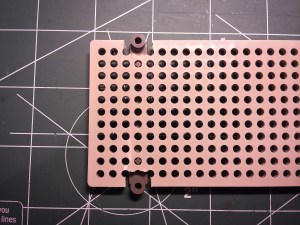
Mounting the Gearbox
Mounting the gearbox requires cutting holes into the side of the universal plate and using a special mounting piece shown above. For my setup I position the mounting point 4 holes from the end of the plate.
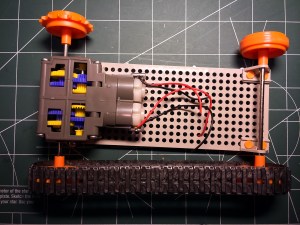
Wrong Driver Sprocket
The idlers I placed at the forward most point on the plate.
I initially used the large driver sprocket – as show in the photo above – for the rear drive but, as you can see, it is not inline with the idlers. I actually needed to use the small driver sprocket for the gear config I had chosen.
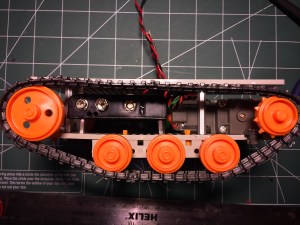
Finished Track With Road Wheels
With the correct (smaller) sprocket in place I added the road wheels, mounted a 4xAA battery holder and used the second universal plate to create an upper deck where I can mount the electronics.

Front View
View from the front. You can see the spacers I used to mount the battery holder and the upper deck.
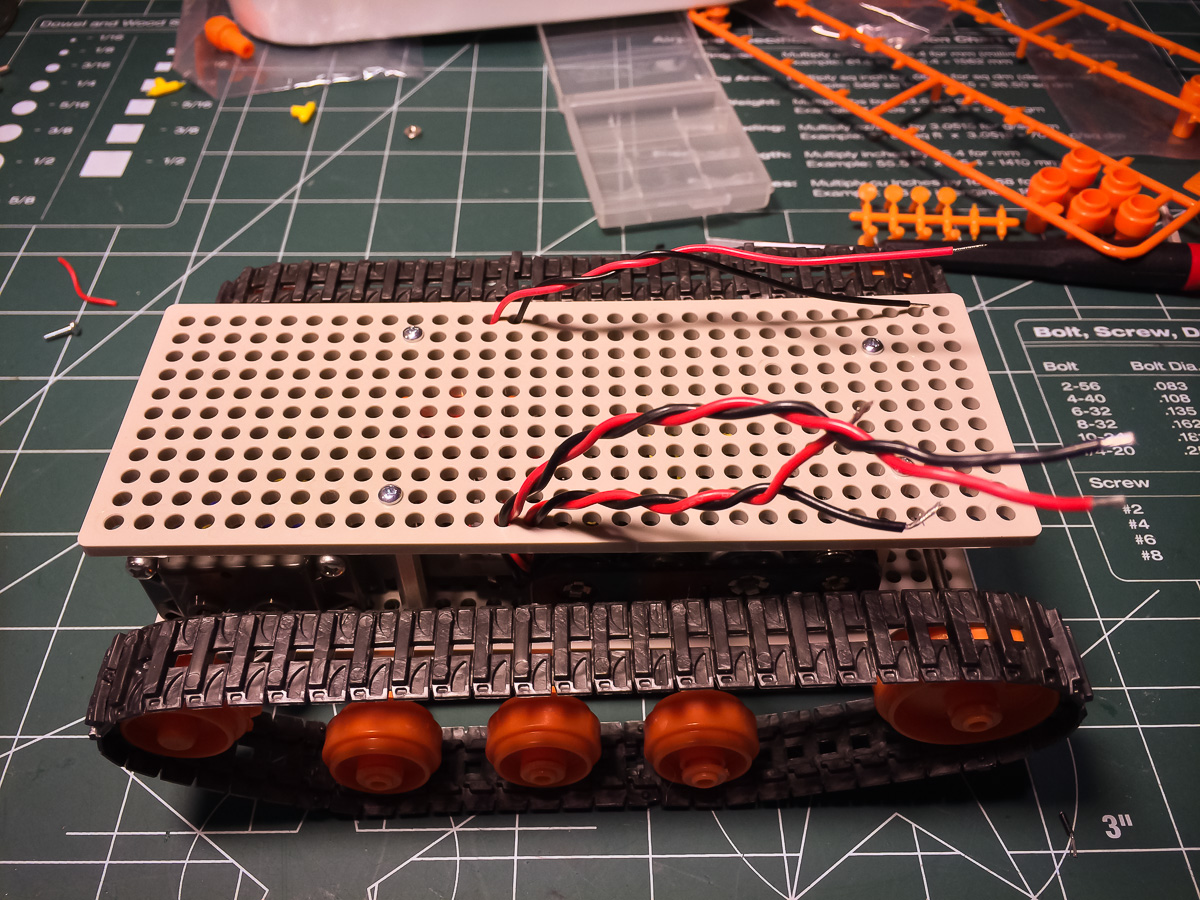
Side View With TopDeck
Side view showing motor (near) and battery (far) wires routed through the upper deck.
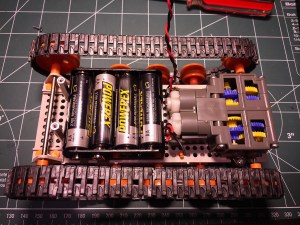
View Without Deck
So far so good. The construction feels solid enough. Need to get the Arduino installed with its motor shield so I can take this for spin. So much to do, so little time…


Very nice ‘how to’ building that robot! I have built that one too a while back, but not published any pictures or article about it. Too bad, I need to do this. Later, I have built a tracked robot based on the Tamiya gearbox, but using the Pololu Track pins and wheels: these tracks are very good and allow different designs, but the have not much grip on the ground. You can see it here:
and here:
LikeLike